
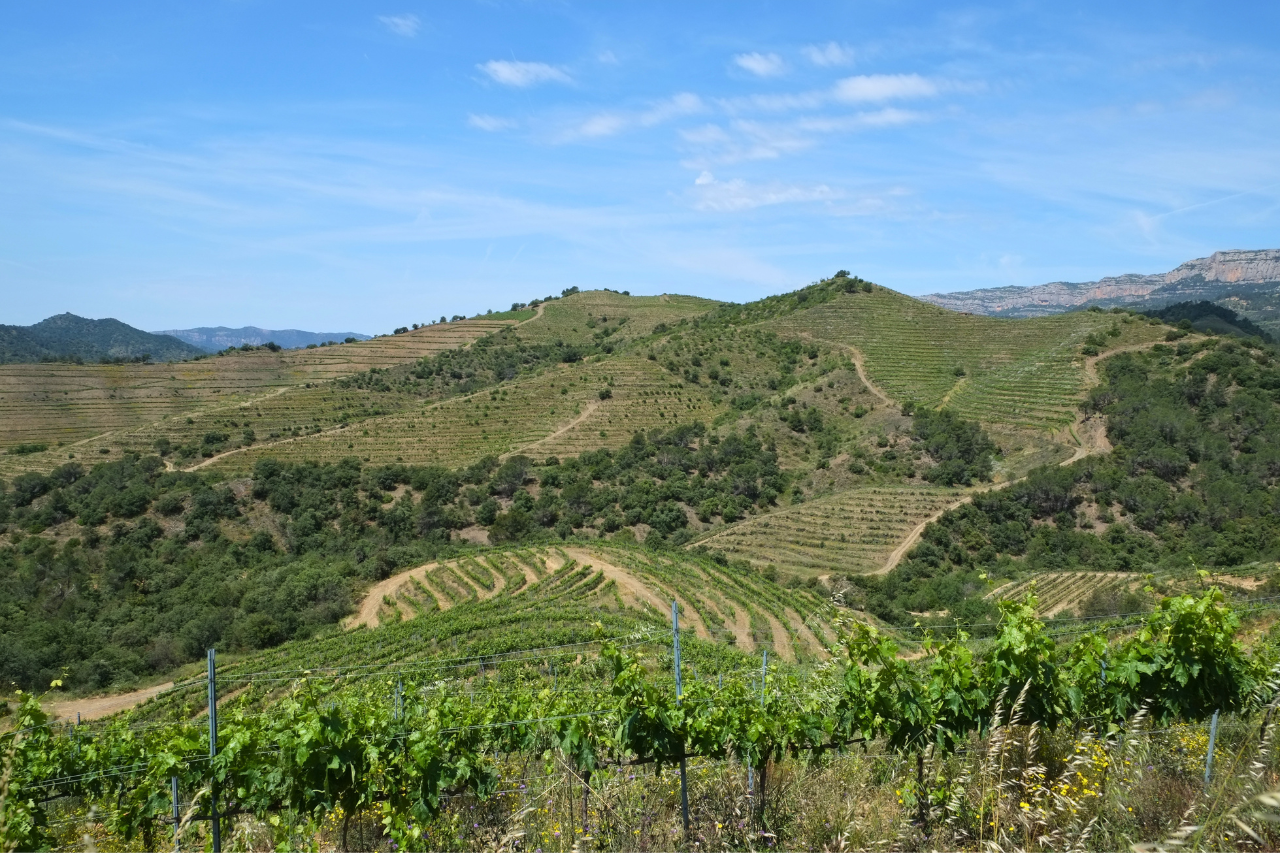
Priorat is widely known in the wine world for its extreme viticulture, due to the rugged terrain and stony soil, but above all for the quality of its wines, which have earned the area the category of Denomination of Origin Priorat (DOQ), the highest quality recognition in Spanish wine.
Despite its prestige, there are many beliefs surrounding Priorat wines, which do not always correspond to reality. In this article we investigate five of these myths to break the most deeply rooted prejudices in Priorat.
1. All Priorat wines are strong and alcoholic
Although it is true that Priorat wines are known for their intensity and alcoholic content (around 14ºC – 15ºC), favored by its climatic conditions and orography, the area has experienced a strong evolution in recent years. Currently, many wineries are looking not only to produce power, but a fresher, more elegant and balanced style, which conveys the landscape and minerality of the area.
Therefore, believing that all Priorat wines are corpulent is a very reductionist view, which does not do justice to the great diversity of wines produced in the area.
2. Only red wines are produced in Priorat
In the same vein as the previous one, historically, Priorat has stood out for its intense red wines made from varieties such as Carignan and Grenache, but more and more white wines are found there, with fresh and aromatic profiles. The whites, above all, are made in the highest and coolest areas of the vineyard. An example of a Priorat white wine is Maius blanc, a mineral and balanced wine.
3. Priorat wines have a lot of wood
Today, Priorat does not make wines in the same way as it used to and the use of wood is a clear example of this. Although it continues to be used, the objective has changed. This has ceased to be the protagonist and the current trend is to look for fresher and more delicate wines, where, if there is wood, the purpose is to accompany the wine and respect its expression without masking it.
4. Priorat wines are difficult to pair
There is a belief that Priorat wines, due to their intensity and complexity, only pair with very strong dishes or very sophisticated cuisine, but the reality is that they can be very versatile and gastronomic wines.
These are wines that work very well with Mediterranean cuisine dishes, such as grilled meat, cold cuts, cured cheeses, mountain rice dishes, mushrooms or varied dishes with Mediterranean herbs. However, they also go very well with baked vegetables, vegetarian dishes, pasta and fish such as tuna.
Discover ideas for pairings with our Priorat wines here.
5. Grenache is the only important variety in Priorat
Grenache is part of the historical identity of the area and is a variety widely used for its wines, but it is by no means the only one. Carignan is essential in the production of Priorat wines and conveys the character of the region very well. In addition to these two traditional varieties, others are grown in Priorat such as Syrah, Cabernet Sauvignon, Merlot, Grenache Blanc, Macabeu and Carignan Blanc.