
When choosing a wine, it is important to pay attention to the information provided by the label, as this will provide valuable information that will help us decide which wine is most suitable for each occasion.
Although it may be confusing at first, most wine labels share a series of elements that, if understood correctly, will allow us to make better decisions when buying a wine.
In this article, we will break down each of these elements one by one so that from now on, you can read a label with knowledge and choose with confidence.
Name of the wine
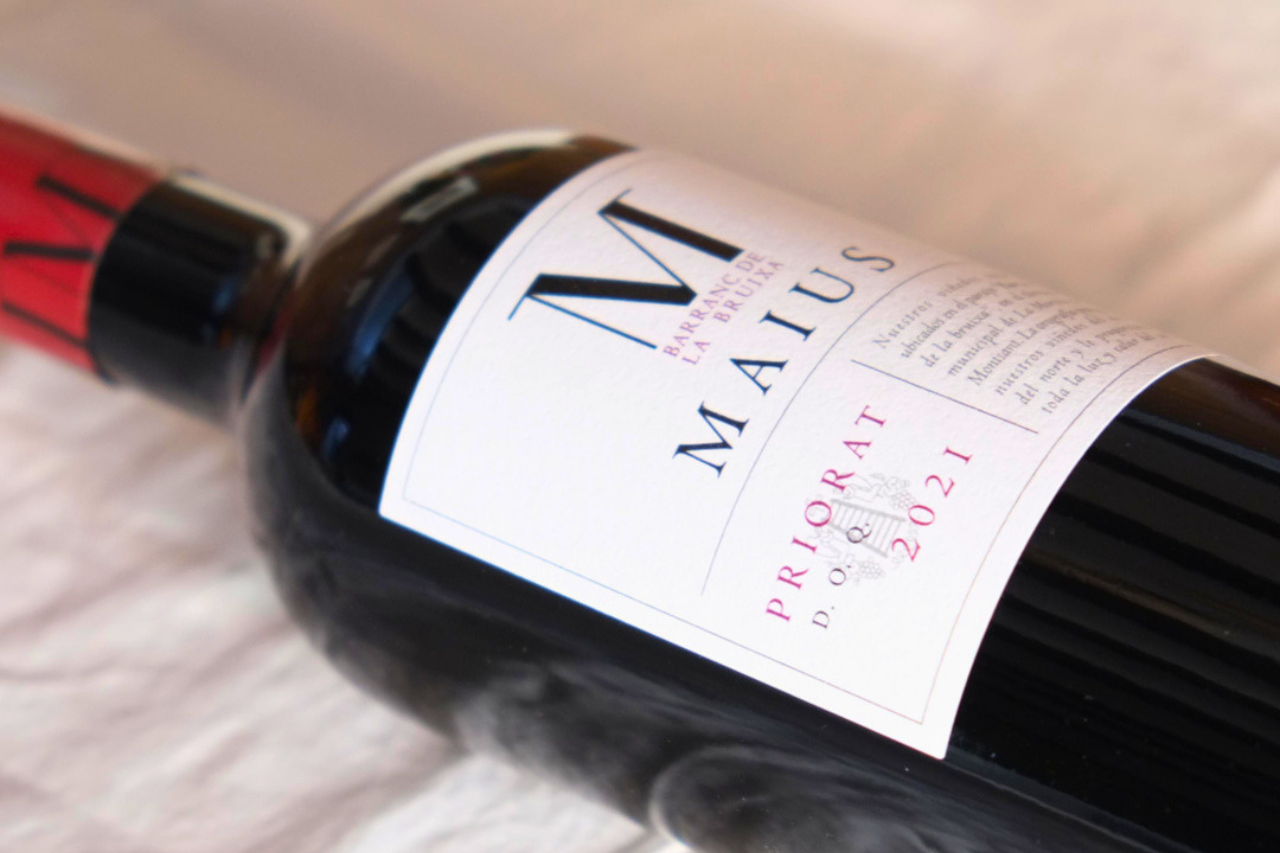
It is located on the front of the label and is usually the most distinctive element and the one that allows us to differentiate one wine from another. In many cases, such as Maius, the name of the wine is the same as that of the winery, although there are also many wines that have their own name.
Designation of Origin
It indicates the geographical origin of the wine. It is a symbol of quality and official certification that guarantees that a wine comes from a specific region and that it has been produced following strict cultivation and production standards.
Each designation of origin has unique characteristics that are determined by the climatic and soil conditions of the area, in addition to the specific regulations established by the regulatory council of each region.
The Maius, for example, comes from the Priorat Qualified Designation of Origin, which is the highest quality category that a wine can receive in Spain and requires stricter requirements than the DO.
Vintage
It refers to the year in which the grapes were harvested to make the wine. This is very important data, since it allows us to know the climatic conditions of that year and, therefore, is an indicator of the quality, flavor and aging potential of the wine.
Grape variety
It tells us the type of grape from which the wine is made. Each grape variety brings different characteristics and helps us understand the flavor profile of the wine. Not all wines specify the grape varieties, and sometimes, the generic term “white” or “red” is simply used.
Alcohol content
This information is mandatory on the labeling of any wine and must be expressed as a percentage by volume. It tells us the amount of alcohol the wine contains and can be an indicator of the intensity and body of the wine.
Producer
The name and address of the winery responsible usually appear. It provides key information for the consumer, as it identifies the winemaking company and guarantees the traceability of the wine.
Others
In addition to the elements described, which are the most important and common, there are other indications that we can find on the labels: classification according to the aging of the wine, presence of sulfites or additives, information on recycling, awards and recognitions and the batch number.