
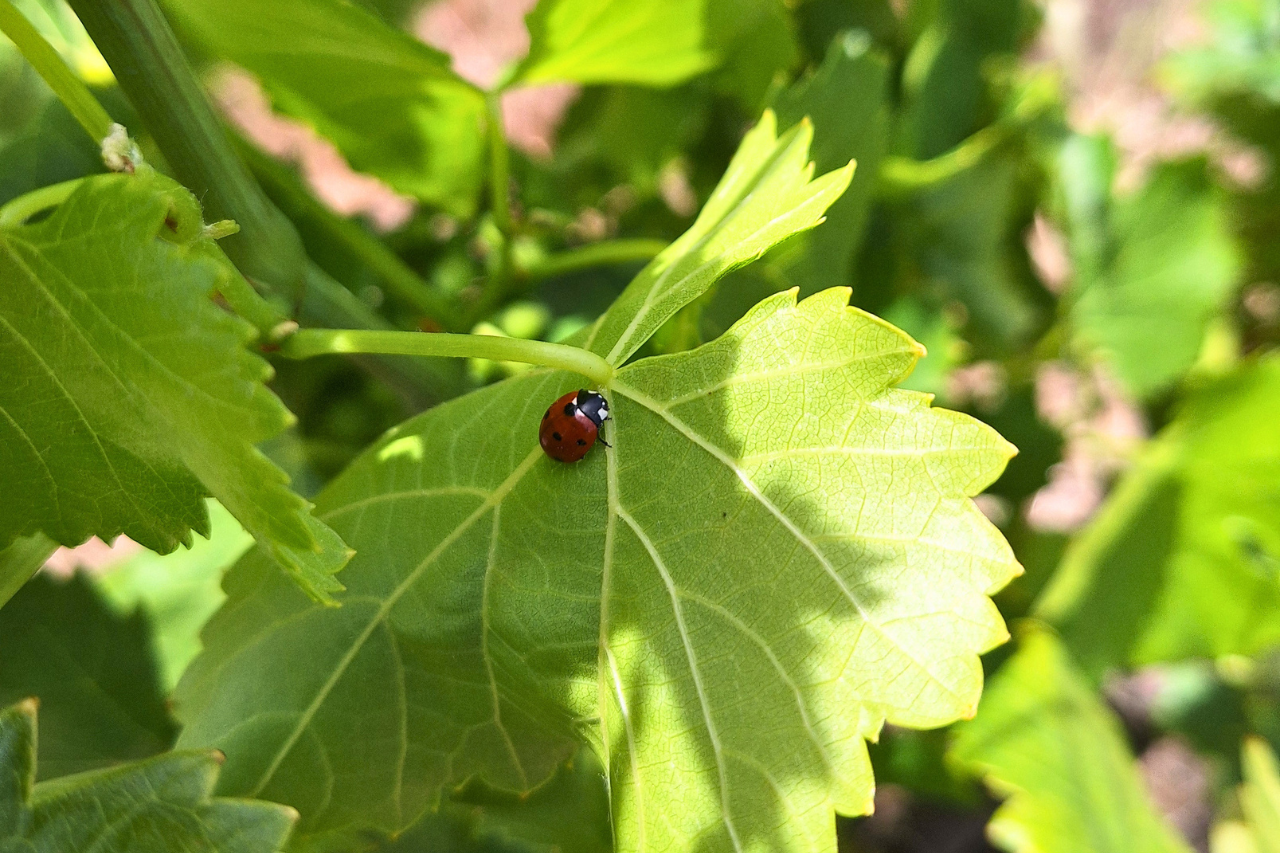
When we talk about insects in the vineyard, we quickly think of pests that affect crops and can be very harmful, but the reality is that there are also many insects that have a beneficial effect on the vines and act as true allies, not only protecting them but also improving the biodiversity of the whole.
Therefore, today we will focus only on that fauna that plays an important role in the health of the vineyard and the quality of the grapes. We can find from pollinating and decomposer insects to predators or parasites.
The silent protectors
Ladybugs: both in their larval and adult stages, ladybugs are true predators of aphids, mites and mealybugs. In fact, a single ladybug can consume dozens of aphids in a single day. In this way, they reduce the need to apply pest control treatments and are indicators of the ecological health of a vineyard.
Green lacewing: this is a bright green winged insect that plays an important role in the vineyard. The larvae of this species are known as the “aphid lion” due to their ability to devour the eggs of small insects and mites. When they are adults, lacewings also feed on insects and pollen and nectar, so plant covers favor their presence.
Parasitoid wasps: they act as natural biological control agents by depositing their eggs inside other pest insects such as the grapevine weevil. Once they hatch, the larvae devour the host insect from the inside, thus effectively eliminating the pest.
Hoverflies: when they are larvae they act as insect predators and when they are adults they become excellent pollinators, being one of the most important groups after bees.
Beetles: specifically Stethorus punctillum are great predators that control pests such as the red or yellow spider mite, quite common pests in the vineyard.
Others: insects such as bees and bumblebees and mantises, although they are not exclusive to the vineyard, also have a very beneficial effect on the crop and are clear indicators of health and biodiversity in the vineyard.