
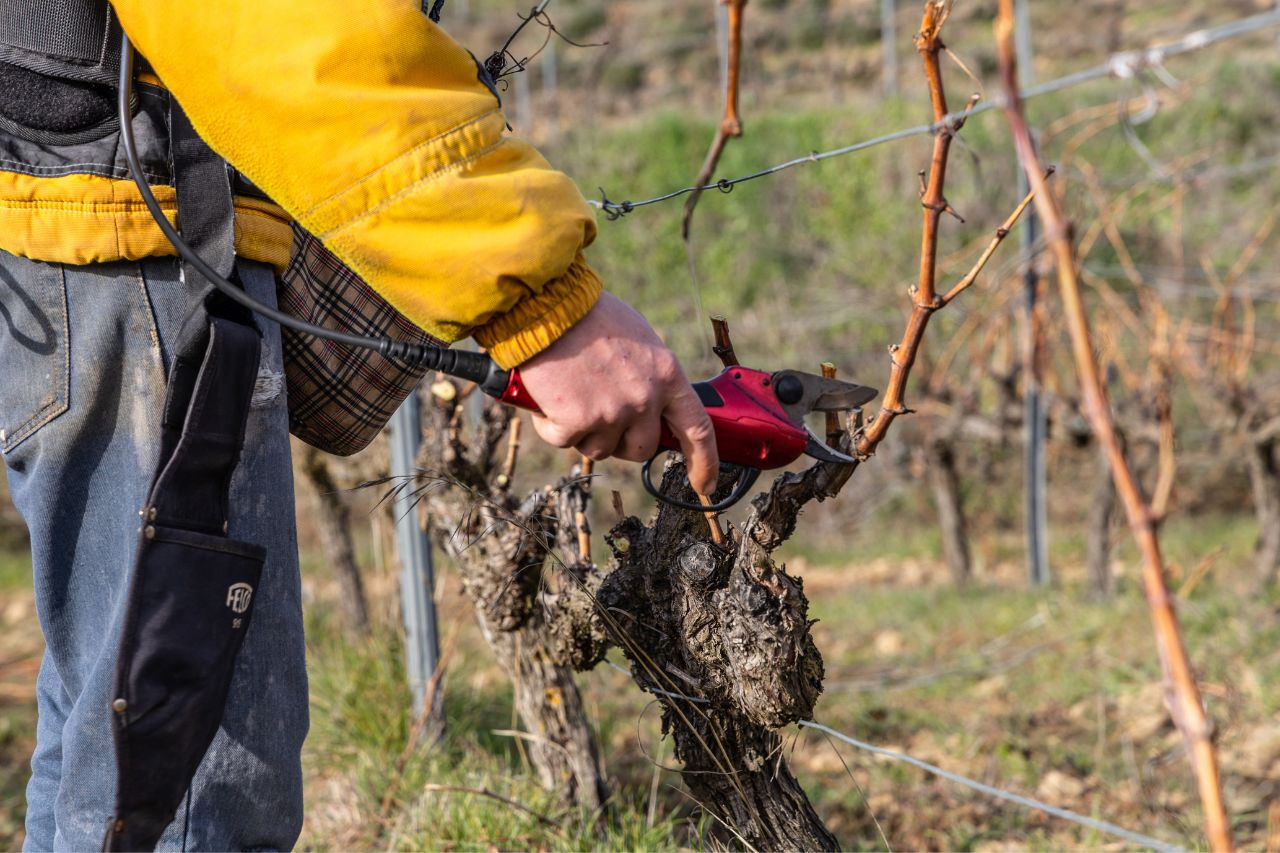
Winter pruning, also known as dry pruning, consists of removing old wood from the vine, leaving only the most fertile shoots. This process is carried out during the winter months, between November and March, when the plant is in vegetative rest. During this time, the sap descends to the root, so that all the energy is concentrated in the essential parts of the vine, making it more resistant to frost and minimizing possible damage.
Types of pruning
Depending on the vigor of the plant, the grape variety, the training system and the objectives we are seeking, we will opt for one type of pruning or another.
Short pruning or Cordon Royat is common in trellises, ideal for varieties with high basal fertility. It is characterized by having one or two permanent and stable horizontal arms located on a conducting wire. This technique facilitates mechanization.
Long pruning or Guyot is the most recommended for low-fertility varieties and consists of leaving one or two shoots on each vine, along with two thumbs. This type of pruning is used to increase production in low and medium-vigorous vines.
Cup pruning is widely used in Mediterranean vineyards where the vines grow freely without support. Three or four ascending arms are formed that can be shortened. In this way, the grapes ripen better and the plant is aerated.
Benefits
Pruning allows you to control the growth of the vine, preventing it from growing excessively and without structure. Thanks to pruning, we facilitate the management of the plant and prevent it from aging. Since we select only fertile shoots, we limit future grape production, since the plant concentrates energy on fewer shoots and, therefore, the grapes become of higher quality. In addition, we ensure the health of the vine, preventing infections and fungi and helping the plant to balance vegetative and reproductive production, key to the long-term sustainability of the vineyard.